By Visa Arab Saudi editorial team · 20 views
Planning a Saudi trip for a family means keeping several small plans together. One person may hold a different passport. A child may need help with an application. Someone may be renewing a document while another person already has a visa. The easiest start is a separate check for every traveller and one clear plan for the group.
This Saudi visa for a family from the UAE guide explains how to organise that work. It covers the first enquiry, document folders, family quotations, travel bookings and the final review. It is designed to help you ask useful questions without turning the dining table into a mountain of confusing paperwork.
Your family can share an itinerary, but do not assume that one person's application route settles everyone else's position. Confirm each traveller's circumstances through the relevant official channel. Visa Arab Saudi is a private assistance service. Saudi authorities decide applications and admission. The guide helps you prepare; it does not promise an outcome for the group.
Begin with a family travel summary
Write down who wants to travel, the reason for the visit and the intended dates. Include whether you want a holiday, a visit to relatives or help planning an Umrah journey. If the group has more than one purpose, explain that clearly. A provider needs to understand the actual plan before suggesting which routes should be checked.
Keep the first summary short. You can use a name or family label, the traveller's age group, nationality and the stage of the document review. Ask the provider which details it needs for an initial enquiry. You do not need to send every private record to every company simply to ask about the service it offers.
Give each person their own row
Use a page with one row for each traveller. Record whether the current passport has been checked, whether the application route is confirmed and whether a question remains. Leave a blank space where the answer is not known. A blank is more useful than a confident guess because it shows what you still need to resolve.
Avoid putting full passport numbers into a summary shared with the whole family. Keep detailed records in the appropriate private folder. The summary should help the organiser see progress, not become another complete store of sensitive information. Our Saudi visa document checklist can help you decide which document questions to review first.
Check each passport and residence position
Read the current passport for every person, including children. Note any renewal in progress, damage or other change that needs guidance. Do not rely on an old scan simply because the file name looks familiar. Ask which passport will be used for the trip and check the document itself before preparing an application.
Review UAE residence information separately where relevant. A family member's residence situation can differ from another person's. Tell the assistance team about a renewal or change that may affect the enquiry. Ask the responsible channel about the current requirements instead of assuming that everyone living at the same address has identical travel conditions.
Different passports need separate answers
Some families include different nationalities. Describe that at the beginning and ask for an individual route check. You may still be able to organise transport and accommodation together, but the paperwork should reflect the circumstances of each traveller. Do not copy one adult's answer into another person's row without confirming that it applies.
If a reply refers to eligibility, read what facts it is based on. Check that the provider understood the nationality, residence position and travel purpose correctly. If one of those facts changes, ask whether the earlier answer needs review. A helpful consultation should leave you knowing which point is confirmed and which still needs an official answer.
Make one current folder for each traveller
Create separate folders before collecting scans. Use simple labels such as adult one, adult two and child one in a private family workspace. Within each folder, keep the current passport, requested photograph, relevant residence record and application reference. Store older versions apart so they do not appear beside the files intended for submission.
Ask the receiving channel about the required file format and quality. Check that each scan is readable and belongs to the right person. If a document is replaced, mark the old copy as superseded and tell the reviewer which file changed. This small habit can prevent two versions from being used during a busy exchange.
Use a document register without copying everything
A register can say that a current passport has been received, a photograph needs replacing and a form is ready for review. It does not need to repeat every personal number. Add the date of the check and the next action. This makes it easier for the organiser to give a useful update without forwarding all the attachments again.
Choose one sensible place for the working files and agree who can access it. Avoid leaving the only copy in a temporary message thread on one person's phone. Protect sensitive records and use the official or verified secure channel when documents need to be sent. Ask why an extra document is needed if the request is unclear.
Plan how adults will review their own details
A family organiser can coordinate messages, but each adult should understand what is being prepared on their behalf. Agree how the draft will be checked and how corrections will be communicated. Keep the review calm and specific. Read the information against the original document rather than approving a page because the layout looks familiar.
If someone cannot read the language used in a form or reply, arrange help so they understand the relevant information. Do not ask them to approve words they cannot follow. The organiser's role is to make the process clear, including who is providing assistance and where the application is actually being handled.
Check authority to help another applicant
The official tourist eVisa terms describe responsibilities when applying for another person and when acting for a minor. Follow the current process and any consent requirements for the route used. Being a relative or paying the invoice should not be treated as an automatic answer to every permission question in an application system.
Ask the provider how it handles review and authorisation for adult family members. Keep account credentials private and follow the official instructions for assisted applications. If there is a question about who should submit or approve the file, resolve that with the relevant channel rather than improvising a way around the process.
Give children's arrangements their own check
Do not treat a child's file as a shorter copy of an adult's. Ask the official application channel which records and accompanying arrangements apply to that child and journey. Explain the age and who will travel with them. Avoid relying on another family's experience when their documents, ages or family arrangements may have been different.
If only one parent or another adult will accompany the child, describe the actual arrangement when asking for guidance. Confirm what the relevant authorities and carrier require. This guide does not provide a universal consent-document list because the answer needs to fit the route and circumstances. Keep the official instruction with the child's travel records.
Think about the day of travel too
Agree which adult carries the documents and who helps each child during the journey. Keep essential items accessible so the family does not need to unpack every bag at a counter. Explain simple steps to children in advance, such as staying with the agreed adult and keeping their small bag together.
Plan meals, rest and transfer time around the family's needs. These choices do not replace document checks, but they can make the trip easier once the paperwork is settled. Leave enough room in the day for a slower walk, a question at a desk or a change in the transport arrangement.
Request one clear quotation with individual detail
Ask for a written quote that identifies the number of travellers and the services included. Separate official application components, private assistance and travel extras where applicable. Find out which charges apply to each person and whether any group charge is shared. A single large total is hard to assess if the inclusions remain unclear.
Confirm the currency, payment stages and the terms for changes or cancellation. If one family member does not proceed, ask how that affects the remaining quote. Read our Saudi visa fee comparison guide for a practical way to compare the complete payable amounts without confusing a starting price with the final total.
Keep the money record easy to follow
Record the accepted total, each payment, any balance and the invoice reference. If several relatives contribute, agree how shared costs will be split before collecting funds. Save the final quote rather than relying on the first estimate sent before the group size changed. Check a revised calculation whenever someone joins or leaves the plan.
Keep payment evidence separate from approval evidence. Name a receipt as a receipt and a visa outcome as an outcome. This makes updates clearer for everyone. A message saying paid should not become a message saying ready to travel unless the other checks have actually been completed for the person concerned.
Keep application references connected to the right person
When files are submitted, save each reference in the matching folder. Ask where updates will arrive and who checks them. A family organiser may receive several similar messages in a short time. Read the name and reference before telling someone that their file has moved to the next stage.
Use a simple status list with plain words such as awaiting document, submitted, further information requested and outcome received. Use the status supplied by the official process accurately. Do not turn submitted into approved or assume that one person's result means the rest of the family's results will arrive at the same time.
Respond to follow-up requests carefully
If another document is requested, check whose application the request concerns. Read the instruction, provide the relevant current file through the correct channel and keep a note of the response. Avoid sending everybody's documents again unless the process actually asks for them. A focused reply is easier to check and limits unnecessary sharing.
If you use an agency, ask how it will pass official messages to you and what it expects you to do. Agree a practical contact during working hours and travel days. If the main organiser is unavailable, another trusted adult should know how to locate the current status and the appropriate support contact.
Keep bookings flexible while questions remain
A family trip can involve several tickets, a larger room and linked transfers. Check the change conditions before committing to arrangements that are difficult to alter. Ask what happens if one traveller cannot go or if the dates need moving. Read the terms for each supplier because separate services can have separate conditions.
Do not assume a general processing estimate is a confirmed travel date. Plan around the actual progress of the applications and the flexibility of the bookings you choose. If you are considering a short holiday, our first Saudi city break guide can help you think about the shape of the trip without filling every hour.
Check names and passenger details individually
When transport is booked, compare every traveller's details with the intended travel document. A family surname may be shared, but names, dates of birth and passport numbers need their own review. Ask the carrier how changes are handled and keep the final booking confirmation after any update has been completed.
If a passport is renewed during planning, tell both the responsible visa channel and the transport provider. Their records are separate. Ask each what action applies to its own process. Keep the revised documents clearly marked and remove outdated copies from the set that will be printed or carried for departure.
Build accommodation around the real group
Ask the hotel or package provider to confirm the room type, guest count and bed arrangement in writing. Do not assume a room description explains exactly where every child will sleep. Check meal inclusions, arrival time and the practical route between the hotel and the activities planned for the family.
If you are planning an Umrah package, use our hotel room sharing guide and quotation comparison guide. Keep visa checks, any required religious travel arrangements and the hotel contract as distinct parts of the plan. Confirm current official requirements for the intended visit separately.
Ask about access and everyday needs
If a relative needs a step-free route, a quieter room or help with luggage, ask for the specific feature that matters. A broad description such as suitable for families may not answer the practical question. Request a clear explanation of what is available and what needs arranging before arrival.
Share relevant needs with the provider without sending unrelated private history. Tell the family what has been confirmed and what remains a request. This helps avoid promising a room location or transfer feature that the supplier has not agreed to provide. Keep the confirmation with the accommodation and transport records.
Prepare one family departure pack
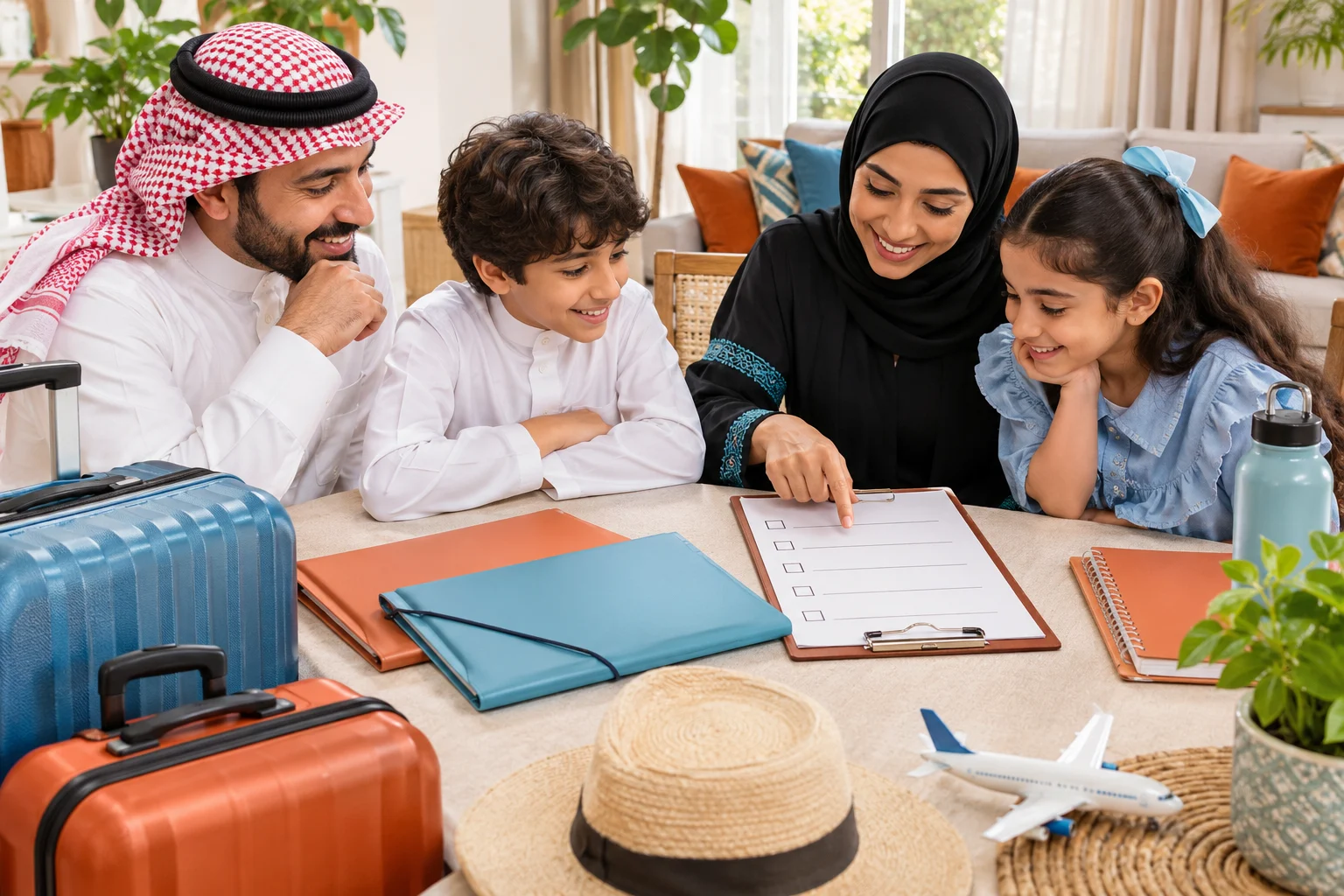
Make a short checklist for each person and a shared page for the itinerary. Keep the required originals safe and any useful offline copies accessible. Confirm which adult is responsible for the documents, transport contact and accommodation details. The organiser should be able to find a record quickly without searching through unrelated photos.
Have every adult review their own final set before departure. For children, the responsible adult should check the matching documents and arrangements. Look for changed details as well as missing pages. An older printout can look neat and complete while still being the wrong version for the journey.
Give everyone a simple travel plan
Share the departure time, meeting point, transport contact and the first accommodation address with the adults who need them. Explain where the group meets if separated. Avoid placing sensitive identity documents in a large casual group chat just to share the itinerary. The travel plan and the private application files serve different purposes.
Keep a small list of unresolved issues until they are answered. If an important document question remains, contact the responsible channel before departure. A family can be packed and excited while still needing one official answer. Treat that answer as part of getting ready rather than leaving it for the check-in counter.
An example of a well-organised family plan
Imagine two adults and two children planning a visit from Dubai. The organiser creates four rows and four folders. One adult has a passport renewal in progress, so that row stays open. The others still receive their own route and document review. The family asks for a quote that clearly shows each application and the shared travel services.
When a follow-up message arrives for one child, the organiser checks the reference and sends the requested current file through the proper channel. After outcomes are received, the family reviews each document and confirms the passenger records with the carrier. The example shows an organising method, not a promise that every family will follow the same application route or receive the same result.
Ten frequently asked questions
1. Can a whole family use one Saudi visa application?
Check the official process for the route being considered. Do not assume that a shared trip removes the need to review each traveller's details and circumstances. Ask how family members are entered, what records apply to each person and how the references and outcomes will be provided.
2. What if family members have different passports?
Tell the provider at the start and ask for an individual route check. Nationality, residence position and travel purpose should be understood for each person. Keep the answers in separate rows. A route identified for one adult should not be copied to the rest of the family without confirmation.
3. Do children need their own document review?
Yes, give every child a separate review of the relevant current records and ask the official channel what applies. Explain the age and accompanying arrangement. Follow the instructions for the actual journey instead of assuming that another child's previous trip supplies a complete checklist for yours.
4. Can one adult organise the applications?
An adult can help coordinate the plan, but follow the official process for authority, consent and assistance. Each adult should understand and review what is prepared on their behalf. Ask the provider how it handles approvals and access, and avoid sharing account credentials casually between relatives.
5. Should we send all passports with the first enquiry?
Ask which basic facts are needed to identify the service first. Verify the provider and secure submission channel before sending sensitive documents. Keep the files separate and supply what the relevant process requests. An initial quotation enquiry and a formal document submission are different stages.
6. What if only one family member has an outcome?
Record that person's result accurately and continue checking the other references through the proper channel. Do not assume the whole group is approved because one message arrived. Keep booking flexibility in mind and ask the responsible provider about the next step for any file still being considered.
7. How do we compare family visa quotations?
Use the same traveller count and service request for each quote. Ask which items are per person, which cover the group and which travel extras are separate. Compare the full amount in the same currency, and read the applicable change and refund terms before choosing a service.
8. What happens if someone renews a passport?
Tell the visa issuing channel or the person preparing the application, depending on its stage. Ask what action is required for that file. Check transport records separately and keep old and new versions clearly labelled. Do not assume that one update automatically changes every record used for the trip.
9. How should we plan a family Umrah trip?
Start with each traveller's visa route and current official requirements, then confirm the travel services. Ask about rooms, beds, transfers, meals and any required visit arrangements. Keep each confirmation in the right place. A package description should be read alongside the official instructions relevant to the intended journey.
10. Where can we ask for private assistance?
Contact Visa Arab Saudi with the group size, travel purpose and intended dates. Explain different passports or document changes early. Ask for the service scope and a written quote. Private assistance can help organise the work, while the relevant Saudi authorities control official decisions and admission.
Sources and next steps
Prepared on 7 November 2026. Consult the official Saudi tourist eVisa terms for responsibilities when using that service for another person or a minor. For other routes, locate the appropriate instructions through the responsible official channel, including KSA Visa where applicable. Review current instructions before submitting.
Begin with the Saudi visa requirements page, the visa assistance service and your family summary. Keep the plan simple enough that another trusted adult can understand it. Separate files, accurate references and clearly assigned next steps make family travel planning easier to manage from the first enquiry to departure.