By Visa Arab Saudi Editorial Team · Published · 9 views
A short Jeddah break from the UAE does not need to become a race between every place on a map. The city offers heritage, waterfront time and opportunities to enjoy a slower meal or an unplanned conversation. The useful question is how to connect a few experiences with the hours you actually have.
This Jeddah short break guide for UAE travellers uses a flexible three-day shape: arrive and settle in, give a main day to the experiences you most want, then keep departure day manageable. It is a planning example, not a fixed tour programme or a promise about current opening, prices or availability.
Before booking, check the travel permission and documents that apply to each person. UAE residence alone does not establish the same entry route for every passport. Visa Arab Saudi provides private assistance; Saudi authorities decide visas and admission. Keep that official check separate from the enjoyable work of choosing what to do.
Decide what a short break means for your group
Start with the reason for the visit. Do you want a first look at the city, time with relatives, heritage photography or a quiet coastal change of scene? Choose two or three priorities. A short list makes it easier to protect the experiences you care about when flights, weather or energy affect the day.
Ask every traveller which part matters most. One person may be excited by old streets while another prefers the waterfront. You can often include both without giving equal time to every possible attraction. The goal is a shared plan, with clear choices rather than a long collection of names.
Count usable time rather than nights alone
Two nights can provide very different visiting time depending on the flights. Write the arrival and departure details beside the intended hotel stay. Include the journey from the airport, check-in arrangements and the return transfer. Those are part of the trip, not spare time that can automatically be used for sightseeing.
If a flight lands late, treat the first evening accordingly. A relaxed meal may be a better fit than a timed visit across the city. If departure is early, keep the previous evening realistic. The shape of a good short break follows the actual travel window, not the headline number of days.
Use official destination information to choose the broad themes
Visit Saudi describes Jeddah through its coastal setting, historic architecture and cultural experiences. Its Jeddah destination page highlights Al-Balad and the Corniche among the city's places of interest. These give useful starting themes for a first visit without implying that every experience belongs in one day.
Choose a heritage block and a waterfront block if those match the group. Then decide whether you want another specific experience or simply more time to enjoy those two. A shorter list can produce a richer visit when you leave enough room to notice the place rather than repeatedly move on.
Treat a destination guide as a starting point
Check the current venue or service information for anything requiring a booking. An area description does not confirm an individual exhibition, restaurant table or guided visit on your dates. Keep ideas separate from reservations and write down which details still need a current answer.
Use our first Saudi city break guide for related planning questions. The purpose is to build a coherent trip, not copy a general itinerary word for word. Your arrival time, interests and household routine should still shape the final version.
Choose a hotel around the route you intend to follow
Check the exact hotel address against your proposed visits. A broad label such as central or coastal does not tell you the full journey to a particular entrance. Use current mapping and ask the provider about the actual transport arrangement before assuming every stop will be easy to reach.
Think about the beginning and end of the day. Where will you meet a vehicle? Would you want to return between visits? Is the room arrangement suitable for everyone staying? A good base supports the travel plan rather than simply looking attractive in the first photograph.
Confirm the room and arrival arrangement
Ask about the actual room category, beds, guest count, meals and check-in conditions. A morning arrival does not automatically provide immediate room access. If a particular arrangement matters, distinguish a confirmed feature from a request that remains subject to availability.
Keep the booking name, address and reference offline. The Saudi airport arrival checklist explains how hotel details connect with baggage collection and meeting a transfer. A clear first destination is especially helpful when a flight delay changes the expected arrival window.
Day one: arrive, settle in and keep the evening flexible
Build the first day around the actual flight. Allow time for the airport process, bags and the confirmed onward journey. Do not start the itinerary at the aircraft's landing time as though the group will immediately be outside and ready for a separate activity.
Once settled, choose something that fits the remaining time and the group's energy. It may be a meal near the accommodation or a modest introduction to an area you have checked. Keep any optional stop genuinely optional instead of adding a booking that creates pressure if arrival takes longer.
Use the evening to confirm tomorrow's plan
Check the next day's meeting point, booking references and current instructions. Make sure everyone understands the main experience and the flexible parts. This should take a few calm minutes, not consume the whole evening with another round of searching for attractions.
Ask whether the travel day has changed anyone's preferences. If the group wants a later start or a shorter walk, adjust the flexible parts through the relevant providers. A good short break can respond to real people without abandoning the purpose of the visit.
Day two: give Al-Balad a clear place in the day
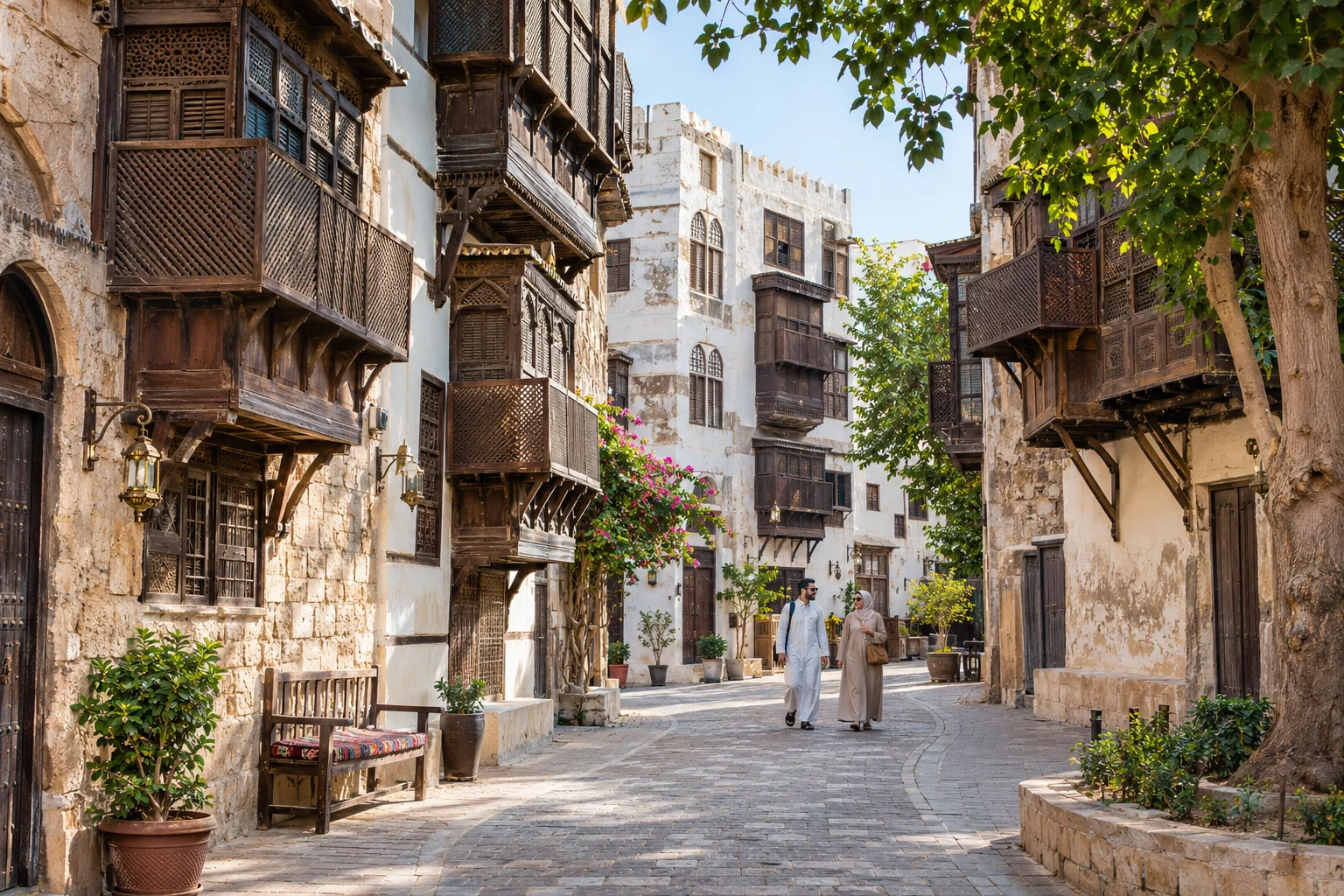
If historic streets and architecture interest you, plan a focused Al-Balad visit rather than treating it as a quick photograph between distant stops. Visit Saudi identifies it as Jeddah's historic district, known for heritage buildings and traditional markets. Decide which aspect you want to understand and how much walking suits the group.
Check current guidance for the places you want to enter and any guided service you plan to book. Exploring an area and entering a particular building are different arrangements. Do not assume a general district description provides access to every door, rooftop or interior that appears in a photograph.
Leave time to look rather than only move
Choose a sensible meeting point and route with the responsible guide or provider where relevant. Allow pauses to notice architectural details, ask questions or sit appropriately. The pace should fit the group, not the speed of the person taking the fewest photographs.
Respect the people who live and work in the area. Ask before photographing identifiable people or entering private spaces. Keep the visit focused on authorised public or booked areas. A memorable travel image should not depend on interrupting a resident's day or ignoring a restriction.
Keep heritage and waterfront time as separate planning blocks
Al-Balad and a waterfront visit offer different experiences. Put the transfer, meal and any pause between them into the plan. A line joining two map points does not include the effort of gathering the group, finding the pickup location and settling into the next visit.
If you use a booked vehicle or tour, ask what the service includes. Confirm the route, waiting and any additional stop before relying on it. Do not assume that a driver available for one transfer is automatically providing unlimited flexible transport for the rest of the day.
Have a shorter version ready
Decide which part can be reduced if the earlier visit takes longer or the group prefers a slower pace. You might keep the main heritage visit and choose a shorter waterfront stop, or give each theme a separate day. The useful choice depends on your priorities and actual departure arrangements.
Avoid moving the pressure into the meal break. A plan that only works when everyone eats quickly is still a tight plan. Let the pause serve its purpose, and change an optional activity where possible rather than treating ordinary needs as an inconvenience.
Plan a Corniche visit around a specific section
The Corniche is a waterfront theme rather than a single small meeting point. Ask which section you intend to visit and how you will arrive and leave. A clear destination is more useful for a short break than a broad instruction to go to the sea.
Think about what you want from the stop: a walk, photographs, a meal or simply time by the water. Check current conditions and the relevant facilities for your group. Do not assume a scenic image establishes shade, seating or access at every point along the route.
Keep the return journey clear
Before starting a walk, know the agreed pickup arrangement or how the group will organise the next journey. Keep essential contacts accessible and avoid splitting up without a simple meeting plan. The end of a relaxed visit should not become an unnecessary search for a vehicle.
Use the official Jeddah weekend ideas as inspiration while confirming current details separately. Treat any suggested timing as context, not a guarantee that the same conditions will apply on your own travel dates.
Choose one additional experience only if it adds something
A short break can include an art visit, a particular dining experience or another activity that genuinely interests the group. Ask why it belongs in the plan. If the answer is only that it is popular online, consider whether more time in an existing area would be more enjoyable.
Check the actual reservation conditions and opening information through the responsible venue or provider. Keep the reference and contact route with the itinerary. A place saved on a phone is an idea; a confirmed booking has its own details and obligations.
Avoid unnecessary cross-city movement
Review the order of the day on a current map. If an optional stop creates a long return journey, decide whether it is worth the trade-off. Do not assume that every short visit is easy to add merely because the activity itself takes little time.
The same principle applies to meals. A restaurant on the route may support a calmer day than one chosen far away without checking the transfer. The best choice is personal, but the journey should be part of the decision rather than discovered after booking.
Day three: protect the departure plan
Check the flight, airport and local departure date before choosing a final activity. Confirm the pickup and follow the airline's current instructions for your booking. Do not use a general travel blog to set a universal airport reporting time for every itinerary.
If there is useful time before departure, choose a modest activity that fits the actual arrangement. Ask about luggage and checkout rather than assuming the room or hotel facilities remain available for any period you need. Keep an alternative if the flight or transfer changes.
Leave the final shopping decision realistic
If you plan to shop, allow for carrying and packing the purchases within current airline and customs requirements. Do not turn the final hour into a search for another suitcase. Check an uncertain item through official sources before buying it for travel.
Avoid making the last activity depend on a chain of unconfirmed timings. A relaxed final meal or short local stop can fit the spirit of the trip better than a distant attraction that makes the group watch the clock throughout the visit.
Keep the quotation connected to the itinerary
Ask which flights, nights, transfers, meals, entries and guiding services are included in an offered package. Keep optional ideas visibly separate. A destination photograph does not establish that every activity shown is included in the price or available on the intended date.
Review the current written terms before payment. Ask how changes or cancellations are handled and which provider is responsible for each part. This guide does not interpret a contract; it helps identify questions that should be answered clearly before you rely on the plan.
Keep the travel permission check separate
Our Saudi visa assistance page explains the private service starting point. Read your own document requirements and issued conditions through the appropriate channels. A hotel or tour reservation should not be treated as proof that an unresolved visa question has been answered.
For a household with different documents, use the family travel planning guide to organise individual questions. Keep each traveller's status visible so the group itinerary does not create a false impression that everyone follows an identical route.
Use a simple three-day planning sheet
Write one main purpose for each day, then add confirmed travel and accommodation details. Below them, list optional experiences and unanswered questions. This separates the plan you can rely on from ideas still needing a booking, current information or a discussion with the group.
For each journey, record the meeting place and contact route. For each reservation, record its reference and relevant conditions. Keep private records secure and share only the practical information needed by the people helping with that part of the trip.
Review the plan together before departure
Ask each traveller whether the pace and priorities make sense. A person who has not followed the booking messages may notice an unclear meeting point or a room assumption that everyone else missed. Those questions are useful, even when they require another provider confirmation.
For help discussing a current Jeddah visit, contact Visa Arab Saudi with your dates, interests and practical requirements. Ask what the team can arrange and obtain a clear scope. A good short break is built from a few well-connected experiences, with enough room to enjoy them.
Build a route card for the day you actually choose
After selecting the main experiences, turn the day into a short route card. Write the accommodation, first meeting point, main visit, meal or pause and return arrangement in order. Place optional ideas below the confirmed sequence so nobody mistakes an interesting possibility for a reservation that must be reached.
Beside each booked part, note the reference and provider contact. Beside each open idea, note the question still needing an answer. This creates a useful distinction between a route you can follow and a collection of online suggestions. It also makes it easier to explain the plan to someone who did not take part in the booking conversation.
Compare a full version and a shorter version
Imagine the group has enough time and energy for the main heritage visit, a meal and a waterfront stop. That can be the fuller version. Then write a shorter version that keeps the main experience and removes one transition. You are not planning to miss something; you are giving the day a sensible shape if preferences change.
Check any booking conditions before treating a stop as movable. A flexible idea and a non-flexible reservation are different. The route card should show that difference clearly, rather than give the family an impression that every service can be changed freely after departure.
Use photographs to support memory, not control the visit
A few places may appeal because you have seen striking images. Keep those as inspiration while enjoying the actual conditions on the day. Light, access and activity can differ. Do not make the group wait for a perfect photograph when a relaxed walk or conversation would better serve the reason for the trip.
Ask before photographing people and follow current venue guidance. A clear record can include your own notes, permitted images and the names of places you enjoyed. It does not need to expose private interiors or interrupt someone else's visit to be meaningful.
End with a clear return to the base
Before leaving the final area, check that the group understands the next meeting point and has the relevant belongings. If the plan changed, send one current update to the person helping with the journey. Avoid several conflicting location messages that make an ordinary pickup harder than necessary.
Back at the accommodation, keep the next day's main arrangement ready and leave the rest of the evening free to enjoy. A short break benefits from preparation, but it should not require endless administration after every stop. The best route card is the one that helps the day run clearly and then gets out of the way.
10 frequently asked questions
1. Is a short Jeddah break possible from the UAE?
Plan around the actual flights and usable time rather than the number of nights alone. A focused visit can suit a few clear priorities. Check each traveller's documents and current requirements before booking, and keep arrival and departure arrangements realistic rather than filling every available gap.
2. What should a first Jeddah visit focus on?
Heritage and waterfront time are useful starting themes if they interest your group. Al-Balad and a specific Corniche section can provide different perspectives. Choose experiences deliberately, confirm current details and avoid treating every popular suggestion as an essential part of a short trip.
3. Should I book sightseeing immediately after landing?
Allow for official checks, bags, the onward journey and accommodation arrangements. Landing time does not mean the group is immediately ready for a separate activity. A flexible first evening can make a delay easier to manage without affecting several connected reservations.
4. How should I choose a hotel base?
Compare the exact address with your intended route and transport, then confirm beds, guests, meals and check-in. A broad description such as central does not establish every practical journey. Keep important room features confirmed rather than relying solely on an attractive image.
5. Can I enter every historic building in Al-Balad?
Do not assume that a district visit provides access to every interior. Check current venue guidance and any booked service. Respect private spaces and restrictions, and ask before photographing people. Keep the route within authorised areas rather than following an appealing image into an unknown space.
6. Is the Corniche one small pickup location?
Use a specific agreed meeting point and section in your plan. A broad waterfront name does not tell a provider exactly where the group will be. Confirm arrival and return arrangements, and check current conditions and facilities relevant to the people travelling.
7. Should I add another attraction to the main sightseeing day?
Only if it adds something the group genuinely wants and fits the whole route. Include travel, meals and pauses in the decision. Keep an optional stop flexible where possible, rather than creating pressure to continue if the main visit takes longer than expected.
8. Can I use this guide for fixed prices and opening hours?
This is a planning framework, not a current ticket or operating timetable. Check the venue or provider for your dates and booking. Save the actual confirmation and conditions. Do not assume an old screenshot or another traveller's experience establishes today's availability.
9. What should we do on departure day?
Protect the flight and confirmed transfer first. Follow the airline's current instructions and ask about checkout and bags. Add a modest final activity only when it fits those arrangements, with an alternative if timing changes. Avoid a distant stop that makes the whole group watch the clock.
10. Can Visa Arab Saudi help plan a Jeddah break?
Share the destination, dates, group needs and main interests. Ask for current service availability and a clear written scope. Private assistance can help organise travel questions and bookings, while visas, border admission and individual venue arrangements remain with the responsible parties.